Country notebook
Europe, read
one journey at a time.
Ten country notes for preparing a phone, protecting your attention and carrying an offline route through ordinary travel days.
These notes do not make coverage, speed or roaming guarantees. Rules and arrangements change; verify current information with the relevant official carrier, transport operator or authority.

A framework for every country
Country guidance is most useful when it stays specific about actions and modest about outcomes. Mobile experience can differ between an airport and a street, a train and a hotel, a city centre and a rural route. Rather than predicting signal, prepare the things that keep a day moving when the phone is slow, busy or offline: an address, a saved route, an offline document, a charged battery and an alternative way to contact someone.
Before every international leg, check the terms attached to the lines you already use. A phone’s eSIM option does not alter roaming conditions, regional rules or a device lock. The current official information from the carrier and device manufacturer is the right source for those questions. Keep the exact model identifier handy, especially if compatibility matters.
The notes below are deliberately provider-neutral. They focus on travel rhythm, public Wi-Fi habits, data planning and border awareness rather than on unverified network claims.
Country note
Germany
Preparation, not a coverage claim
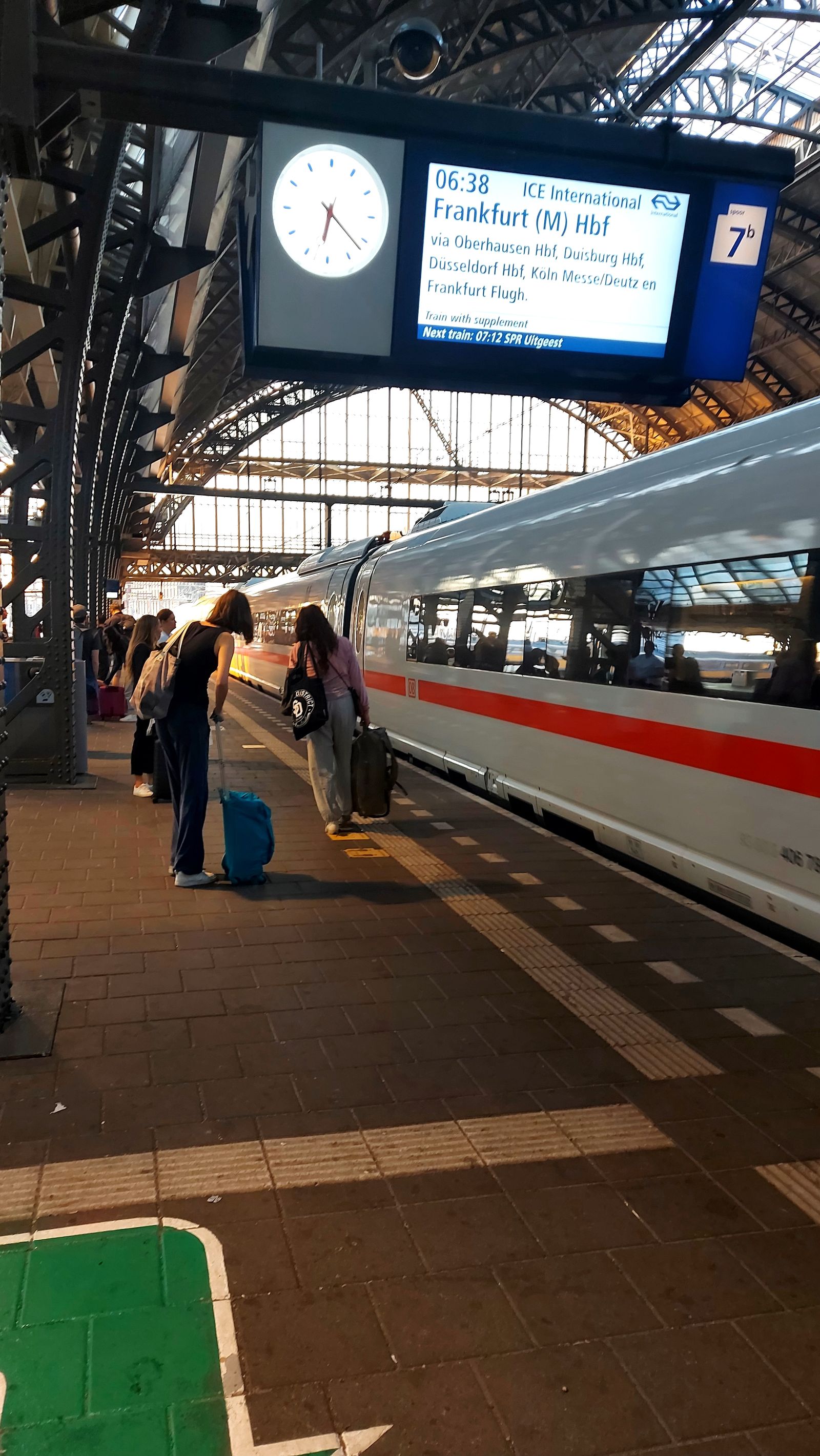
Germany can combine large urban transport hubs, long rail legs and rural or forested travel in one itinerary. Save addresses and platform details locally before boarding, especially if a connection matters during a transfer. For everyday data planning, use trusted Wi-Fi for large map downloads and file syncs, then reserve mobile data for routing, messages and current information. If you rely on an existing mobile line, inspect its official roaming terms before departure; an eSIM-capable device does not change them. At stations and cafés, treat public Wi-Fi as a convenience rather than a private office: verify the network name, avoid sensitive work on an unfamiliar connection, and use secure sites. On an international rail route, keep offline maps as the train approaches another country.
Country note
France
Preparation, not a coverage claim
France rewards an offline-first arrival plan. Major airports, city metros, regional rail services and smaller towns create different connectivity conditions, so preserve the first address, booking code and route in more than one form. Check your device line labels before travel so the intended line handles mobile data. Download maps and translation material on a trusted connection and defer photo backup until Wi-Fi if that fits your routine. Public Wi-Fi can be practical but should not be treated as a private network. For a journey that touches neighbouring countries, check the official roaming rules attached to your line before the border, not afterwards. If a connection appears to change while travelling, check data-line selection and device settings before deleting any profile.
Country note
Spain
Preparation, not a coverage claim
A Spain itinerary may move between dense cities, coastal routes, islands and inland distances. That variety is a reason to make the phone less dependent on continuous data. Download the areas you expect to navigate, save rail or bus information locally when available, and carry the accommodation address in a simple note. Mobile use can grow during scenic journeys because maps, photos and video all compete for battery and data; control background uploads and automatic updates. Review current official information for your own line before travelling, including the terms that matter for your itinerary. Do not interpret a successful connection in one district as a forecast for another. At public Wi-Fi locations, confirm the venue and use ordinary security care before entering sensitive details.
Country note
Italy
Preparation, not a coverage claim
Italy often combines historic centres with narrow streets, regional rail and longer intercity travel. Keep a downloaded map and a written destination name ready; a short interruption should not derail an arrival. Decide which line your phone uses for mobile data before departure and recheck it if you add a digital profile. Cities, hills, underground spaces and moving trains can all change the experience of a connection without indicating a device fault. Use Wi-Fi for major downloads, but check that a hotspot is genuinely operated by the venue before connecting. If your plans include a crossing to another country or territory, read the current official roaming information attached to your line. A family name of phone is not enough to predict its eSIM behaviour; verify the exact model and market in advance.
Country note
Netherlands
Preparation, not a coverage claim
The Netherlands can feel straightforward to navigate, but even a compact itinerary benefits from preparation. Save a local copy of accommodation details, transit directions and meeting locations so that the first connection is helpful rather than essential. Cycling, rail transfers and weather can make screen time awkward, so set up maps and ticket access before you leave the hotel or station. For data planning, disable unnecessary background tasks and wait for trusted Wi-Fi for large media or work syncs. Read the official roaming terms of any line you intend to keep active. At an international boundary or near a neighbouring network, inspect your device’s data selection rather than assuming it has chosen the line you intended. Public Wi-Fi is useful for light reading, but confidential work deserves a connection you understand.
Country note
Belgium
Preparation, not a coverage claim
Belgium is a useful reminder that short distances do not eliminate connectivity preparation. A day may include Brussels, a regional station and a nearby international route. Put the key information in offline storage before the first platform change. Check the current official rules tied to your existing mobile line if you will be moving across borders, and verify that the phone’s selected data line matches your intention. Use a clear label for each line so a last-minute setting is readable. Wi-Fi in a café, hotel or station can help with a download, but network names can be imitated; ask the venue if unsure and avoid sensitive actions on unfamiliar networks. Build enough battery margin for maps and communication on a delayed day, because mobile data and a power bank work together as a travel system.
Country note
Austria
Preparation, not a coverage claim
Austria can bring city travel, mountain rail and cross-border routes into the same trip. Terrain and tunnels make offline preparation especially sensible: load maps, documents and any work material before a long segment. A short service interruption while moving is normal enough to plan around, so do not make a train Wi-Fi connection your sole copy of an itinerary. If you carry more than one line, inspect its labels and select the intended mobile-data line before boarding. Current roaming conditions depend on the mobile arrangement and destination, not on the generic fact that a device has eSIM. Check the official source attached to your own line. In public spaces, use Wi-Fi thoughtfully and retain an alternative way to find the next address. Keep a charger accessible during outdoor and transit-heavy days.
Country note
Czech Republic
Preparation, not a coverage claim
For Czech Republic travel, treat connectivity as a layer on top of an itinerary that should remain readable offline. In Prague and other cities, save the final destination and any reservation details before descending to platforms or entering a crowded station. For regional movement, download maps and language tools early, then restrict automatic photo or file uploads if you want to conserve mobile data. Check your existing line’s current official roaming conditions, including any particular conditions that matter to a multi-country route. A device may see nearby foreign networks in border areas; if behaviour becomes unexpected, review the selected network and data-line setting using your carrier’s official guidance. Public Wi-Fi is not a substitute for common security habits. Verify the hotspot, keep software current, and delay highly sensitive tasks when the connection is unfamiliar.
Country note
Poland
Preparation, not a coverage claim
Poland can involve substantial distance between cities, so separate preparation from real-time use. Download transport details, maps and work files before a long train or bus journey; then use live data for the details that genuinely change. Battery planning matters on travel days, particularly if the phone handles tickets, navigation and messaging. An eSIM may simplify the physical side of a setup on a compatible device, but it does not guarantee a particular travel experience or override a carrier lock. Verify the exact device and current official terms before relying on a feature. If you cross into another country, check relevant roaming information beforehand. At stations and accommodation, public Wi-Fi can be helpful for an update, but secure network practices remain important. Keep important documents available without an internet connection.
Country note
Portugal
Preparation, not a coverage claim
Portugal travel can span dense city streets, coastal journeys and intercity rail. Set up the basics before arrival: a downloaded map, a saved accommodation address, transit information and a way to contact a travel companion without relying on a live browser session. Monitor background app use when taking photos or navigating outdoors; cloud sync and high-resolution media can quietly consume both data and battery. Read the official conditions attached to your own line before the trip and check line selection after any eSIM-related setting change. A historic tram, station or café is not a reason to trust a Wi-Fi network automatically. Confirm the network with the venue and avoid sensitive activity if you cannot verify it. If you continue into another country, revisit the border and roaming preparation rather than assuming yesterday’s setup applies unchanged.
Across every border
The small cross-border check
Before a border segment, save the next address and route while still connected. Read official roaming information for the line you are using, then inspect which line the device has selected for mobile data. In border regions, a phone can notice a nearby foreign network; if that matters to your arrangements, consult current carrier guidance about network selection rather than making a guess.
When you arrive, give the device time to settle and make one simple check: are maps or a lightweight webpage working on the intended line? If not, review the data setting, airplane mode and official instructions. Avoid deleting a profile as an immediate response. A calm, reversible check is usually more informative.